Aluminum CNC Parts, Machined to Your Drawing
Send a STEP file or a dimensioned sketch. We match it with shops that cut aluminum every day and reply within 24 business hours.
Which aluminum should you specify?
Most parts are drawn in 6061 by default and most of the time that is right. Tick what actually matters on your part and the answer may change.
Parts buyers send through this site
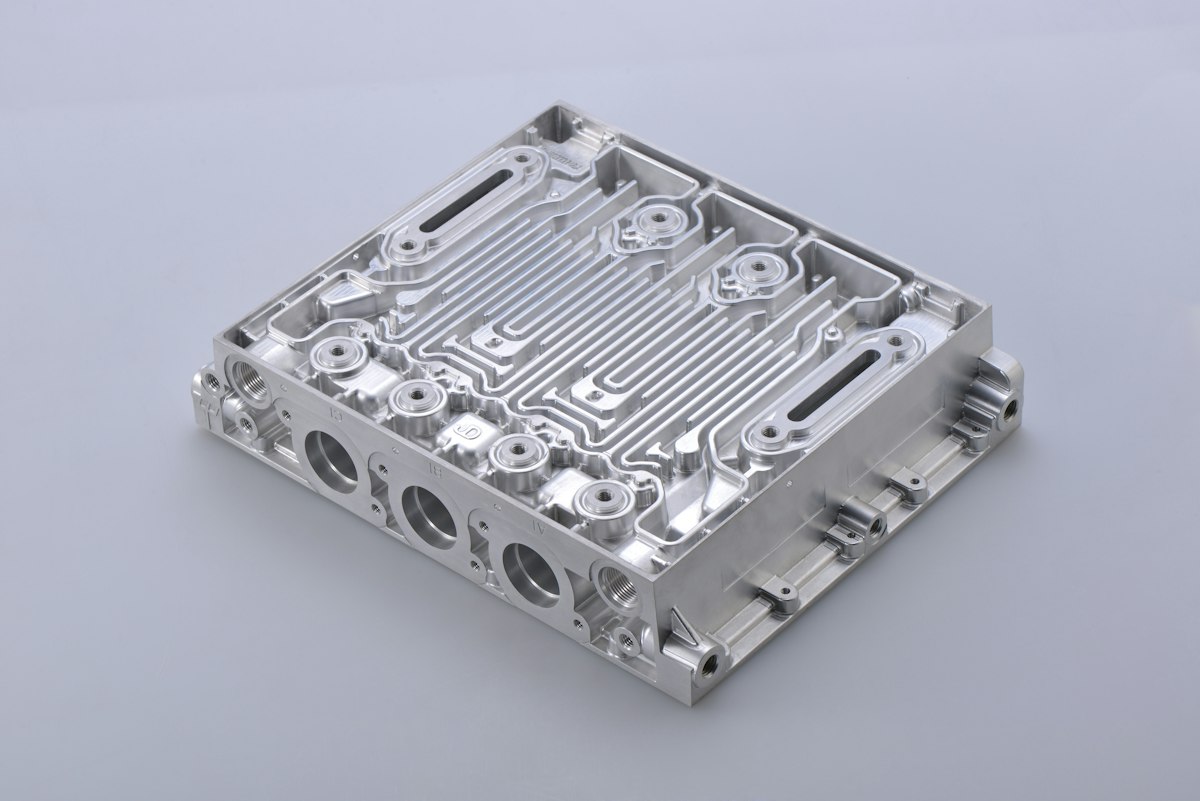
- Machined housings and enclosures
- Bearing blocks and pillow blocks
- Manifolds and fluid blocks
- Heat sinks and cold plates
- Jig plates and fixture bases
- Motor mounts and adapter plates
- Linear rail carriers and brackets
- Optical mounts and stages
- Front panels and faceplates
- Drone and robot chassis parts
If a face has to seal, a bore has to locate or a plate has to stay flat, put it in the RFQ. It decides which shops the request goes to and how they price the inspection.
Aluminum alloys shops quote most often
Yield strength is the shorthand people compare, but it is rarely what decides the alloy. Welding, anodize appearance and how flat the part stays usually matter more.
| Alloy | Where it fits | Yield, typical |
|---|---|---|
| 6061-T6 | The default for machined parts. Cuts fast, welds, and takes a clear or coloured anodize evenly. | 276 MPa |
| 6082-T6 | The alloy European shops stock where a US drawing would call for 6061. Close enough to swap on most parts. | 260 MPa |
| 7075-T6 | Near twice the yield of 6061 for loaded parts. Does not weld, costs more per kilo and anodizes a darker shade. | 503 MPa |
| 2024-T351 | Chosen for fatigue life on parts that flex over and over. Corrodes if left bare, so it is anodized or chem filmed. | 325 MPa |
| 5052-H32 | Formed and folded parts, enclosures and brackets cut from sheet. Gummy to mill, so expect a slower finish pass. | 193 MPa |
| 5083-H111 | Marine plate. Holds up in salt water and welds well, but it is not heat treatable so it will not match 6061 hardness. | 228 MPa |
| MIC-6 cast plate | Stress relieved cast plate for jig plates, base plates and vacuum tables. Stays flat after machining. Anodizes patchy. | 110 MPa |
Figures are typical published values for the temper shown, not a guarantee for your part. The shop that quotes confirms what it can hold on your geometry.
Finishes, and what they do to your dimensions
Aluminum is almost always coated. Coating thickness lands on the part after it is machined, so a fit that was correct on the drawing can end up tight in your hand.
| Finish | What it is for | Effect on size |
|---|---|---|
| As machined | Tool marks stay visible. Fine for internal parts and anything that gets painted later. | Ra 0.8 to 1.6 um on a finish pass |
| Bead blast | Even matte grey that hides tool marks. The usual base under a clear anodize. | Softens sharp edges slightly |
| Type II anodize | Clear or coloured, 5 to 25 um thick. 6061 and 6082 take colour evenly, 7075 runs darker. | Adds roughly half the coating thickness per surface |
| Type III hardcoat | Wear surfaces and bores, 25 to 50 um. Usually dark grey to black even when uncoloured. | About half grows outward, so mask tight fits |
| Chem film | Thin conductive coating to MIL-DTL-5541 for parts that have to bond to ground. | Under 1 um, safe to ignore on fits |
| Powder coat | Thick and tough, good for enclosures and frames. Not for bores, threads or mating faces. | 60 to 120 um, mask anything that fits |
| Brushed then anodized | Directional grain under clear anodize for a part people look at. | Adds a hand step, so it lifts the unit price |
Tolerances worth paying for
Aluminum holds tight tolerances well, but it also moves with temperature more than steel does. Call out the two or three features that matter and leave the rest at standard. That single habit does more for a quote than any amount of negotiating.
Ra 1.6 um is the normal as-machined surface. Ra 0.8 um and below needs a separate finishing pass and a slower feed.
- Standard ±0.13 mmClearance holes, outside profiles, anything that only has to fit in a space.
- Precision ±0.05 mmMost locating features, counterbores, pockets that carry a bought-in part.
- Tight ±0.025 mmBearing bores, dowel holes and shaft fits. Reamed or bored, not drilled.
- Very tight ±0.013 mmRare on aluminum. Needs temperature control and adds inspection time to every piece.
Who sends aluminum RFQs
This site is organised around the material, not around one industry. Mention material certificates, a first article inspection or a cleanliness requirement in the RFQ so we match shops that already work that way.
Machine builders
Frames, guards, bearing blocks and the one-off brackets that hold a machine together.
Electronics and RF
Milled enclosures, heat sinks and shielding cans where flatness and a conductive finish matter.
Robotics and drones
Chassis plates, arm links and mounts where every gram is argued over before the drawing is released.
Lab and optics
Mounts, stages and breadboards that hold alignment, often in MIC-6 or 6061 with a black anodize.
Product development
Ten to two hundred pieces of a part that is still changing between revisions.
Maintenance and repair
Replacement parts for equipment the original supplier stopped making years ago.
Alloy and finish by part type: enclosures, heat sinks, manifolds, fixtures
How it works
One request from you, a short list of shops that fit the part. No bidding platform, no middleman on the purchase order.
Send your RFQ
Upload a STEP file, a PDF drawing or photos, then say alloy, quantity, finish, tolerance and when you need it. About three minutes.
We match up to 3 shops
We read the part and pick shops whose machines, envelope and alloys fit it. You hear from us within 24 business hours.
Shops quote you directly
Each one comes back with a price and a lead time. You compare, ask questions and order from whichever you prefer.
What moves the price of an aluminum part
Six things decide most quotes. When a price comes back higher than you expected, one of these is behind it, and two of them are yours to change on the drawing.
- Billet size, not part sizeYou pay for the block the part starts as. A part that clears a 60 mm block but is drawn from 80 mm stock carries the extra weight and the extra cutting time.
- Number of setupsEvery time the part is unclamped and re-fixtured, someone pays for the fixture and the re-indicating. Features on five faces cost more than the same features on two.
- Alloy7075 and 2024 run two to three times the price of 6061 per kilo. On a part that is mostly swarf that difference is most of the quote.
- Tolerance and finishEvery band tighter than needed adds a finish pass, a reamer or an inspection step. Tolerance the bores and mating faces, leave the rest at standard.
- CoatingAnodize and powder coat go out to a second vendor with their own batch minimums. On ten pieces the minimum charge can beat the machining cost.
- QuantityProgramming and fixtures are paid once. Past roughly fifty pieces the price per part stops falling quickly and settles.
Have a drawing ready?
Send the short version now and we will ask for whatever is missing. To give the full detail up front, use the full RFQ form.
Your files go only to the shops we match. Ask for an NDA and nothing leaves us until it is signed.
Calculators and reference charts
The numbers we look up most often, free and with no sign up. They run in your browser and nothing you type is sent anywhere.
Anodize growth calculator
Work out how much a Type II or Type III coating closes a bore, grows a shaft and eats your fit tolerance.
Surface finish conversion chart
Ra, Rz, RMS and ISO N-grade side by side, with what each band costs to reach on aluminum.
Aluminum alloy selector
Filter the common machining alloys by weldability, anodizing, corrosion, strength and flatness.
Stock and weight calculator
Block weight, finished weight and how much of the billet you are paying to turn into swarf.
Become a partner shop
Cut aluminum for a living? See a preview of every request, with its price, before you pay for it. You quote the buyer directly and we take no percentage of the order.
Questions buyers ask
Something not covered? Email .
Is this free for buyers?
Yes. Sending an RFQ and receiving quotes costs you nothing. Shops pay us for matched requests. Price, lead time and payment terms are settled between you and the shop.
Do you machine the parts yourselves?
No. We read the request and pass it to shops that cut aluminum every week. They quote you, they make the part and you order from them. We are not in the supply chain of the order.
Which alloy should I put on the drawing?
Write 6061-T6 unless something forces your hand. Go to 7075-T6 when the part bends at 6061 strength, 5083 when it lives in salt water, MIC-6 when a large plate has to stay flat after machining. If you are unsure, say what the part does and let the shop propose the alloy.
Will anodizing change my dimensions?
Yes, and it catches people out. A Type II coating adds about half its thickness to each surface, so a 20 um coat closes a bore by roughly 20 um across the diameter. Type III hardcoat is thicker again. Either call the fit out as post-anodize or ask for the feature to be masked.
Who sees my drawing and my contact details?
Shops first see a short preview: part type, alloy, size, quantity, tolerance, finish, region and deadline. It carries no name, no company and no files. Your details and drawings go only to the shops we match, 3 at most. Tick the NDA box and the files stay with us until it is signed.
How many quotes will I get and where are the shops?
Up to 3. When only one or two shops suit the part we send fewer rather than pad the list. You name a preferred region on the form, so you can ask for North America, Europe, Japan, Korea or the rest of Asia, or leave it open and let fit decide.
What is the smallest order, and which files should I send?
One piece is normal for a prototype, though the price per part is high because programming and fixturing are paid once either way. A STEP file plus a PDF drawing carrying tolerances, finish and alloy gets the most accurate quote. DWG, DXF and dimensioned photos are enough to start a conversation.
Guides for aluminum buyers
30 guides on alloys, tolerances, finishing and what drives a quote.
7075-T6 vs 7075-T73: Stress Corrosion and When to Switch
7075-T6 against 7075-T73 for machined parts: typical strength, stress corrosion cracking, conductivity check, T651 and T7351 plate and when the drawing should name T73.
7050 vs 7075 Aluminum: Thick Plate and Through-Hardening
7050 against 7075 for machined parts: quench sensitivity, strength in thick plate, T7451 temper, cost, availability and when a drawing justifies the switch.
2011 Aluminum Machining: Free-Cutting Chips and Limits
2011 free-machining aluminum for turned and milled parts: chip behaviour, thread quality, typical strength, lead and bismuth content, corrosion limits and alternatives.
1100 and 3003 Aluminum: Soft Alloys on a Machining Drawing
1100 and 3003 aluminum on a machined part: typical strength, H14 and O tempers, gummy chips, burrs, anodize look, conductivity and when a harder alloy is the better pick.
6063 vs 6061 Aluminum: Extrusion Alloy on a Machining Drawing
6063-T5/T6 against 6061-T6 for CNC work: machinability, strength, anodize response and thermal conductivity. When 6063 is the right call and when it is not.
CNC Machining vs Die Casting Aluminum: Which One Actually Fits
CNC machining and die casting solve different problems in aluminum. Tooling cost, volume break-even, alloy differences and what a cast part cannot do that a machined one can.